
What Ozaukee County Tax Records Show
Ascent's parcel summary ties the owner and the legal description to assessment and tax detail. Under the county plan, municipal assessors handle valuation. The Treasurer generates tax bills and maintains tax information. A parcel page may offer Assessments, Taxes, Zoning, Districts, Parcel History, and Documents, while the tax-notification tool lists parcel, owner, and mailing address. These are related records, not one countywide appraisal screen.
| Field | What It Shows | Where |
|---|---|---|
| Assessment detail | Parcel assessment by year | Ascent / municipal assessor |
| Tax bill and history | Tax amounts and prior-year detail | Ascent / Treasurer |
| Outstanding TAXES | Years with a balance shown in the detail | Treasurer parcel lookup |
| Tax and school districts | District fields tied to the parcel | Ascent parcel summary |
| Tax-notification record | Parcel, Owner(s), Mailing Address | County notification search |
An assessed value is the figure on the local roll. That number is not a promised sale price. A recorded consideration reflects one specific transaction. Equalized value is the Department of Revenue's estimate for a taxation district. The Wisconsin assessment manual also screens out sales it treats as non-market. Those include family, sheriff, trust, and convenience transfers.
Ascent TAXES Detail for Ozaukee Parcels
Checking a bill starts in Ascent. Search by parcel ID with no punctuation, or by street number and street name. County instructions say Municipality is optional. Leave it blank when the jurisdiction is unclear. Open the parcel result, choose the Select Detail menu, and select TAXES to see the years with outstanding taxes. The Treasurer's screen also shows parcel, Owner(s), Site Address, and Tax Years in its result grid.
- Enter the parcel key or the simplified address in the county tax lookup.
- Open the matching parcel and check the owner, location, and tax years.
- Choose TAXES for the tax detail; use Assessments when the question is about the roll value.
- Ask the Treasurer or municipal collector about payment instructions or an amount that needs confirmation.
The county's Ascent parcel and tax database screenshot illustrates the public entry point.
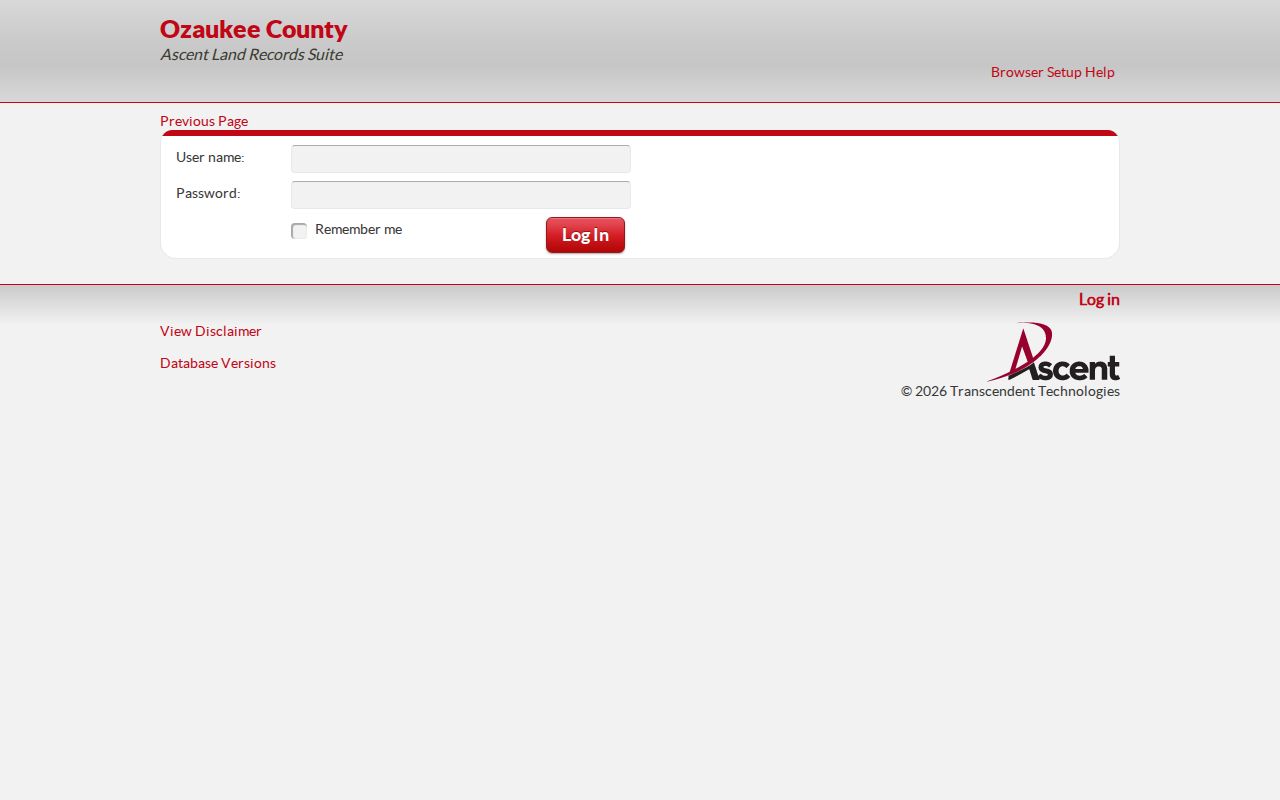
Online information has limits. Not every parcel document appears, the county's sample notes. The public parcel-history view does not reach changes before January 2012, so ask the county for earlier history.
Assessed and Equalized Values in Wisconsin
Wisconsin uses several value terms. None should collapse into a single number. Assessed value is the assessor's parcel figure. Equalized value is DOR's market-value estimate for a taxation district, certified annually, with separate treatment for agricultural land. An assessment ratio compares a parcel assessment with a fair-market sale or value indicator. An assessment level compares assessed and equalized values across a whole municipality.
DOR's Board of Review guide gives a simple example. An assessment of $140,000 against a $150,000 fair-market sale is a 93 percent assessment ratio. That example does not set an Ozaukee County ratio. A municipality-wide level is not one house's ratio. Read the value field, assessment year, and municipality together before comparing numbers.
For the difference between a parcel's assessed value, an actual sale, and market value, the Ozaukee County property value explanation covers what each number means.
Open Book Before an Ozaukee Appeal
Ozaukee owners questioning an assessment start at Open Book. There the owner and assessor discuss the value. If the issue remains, the next formal route is the local Board of Review. The Department of Revenue calendar lists each municipality's dates and clerk or assessor contacts. Sessions generally fall between late May and mid-June. Dates vary, though, and some occur later.
Evidence can include parcel characteristics, comparable properties, recent arm's-length sales, and a clear error in a description or calculation. One sale price does not force a one-parcel adjustment. The Board examines the assessment roll, corrects apparent errors, and decides whether the assessor's value stands. An exemption dispute is a separate question from a valuation objection.
Wisconsin's Open Book and Board of Review calendar is the current route to local dates. Assume no single fixed Ozaukee County appeal day.
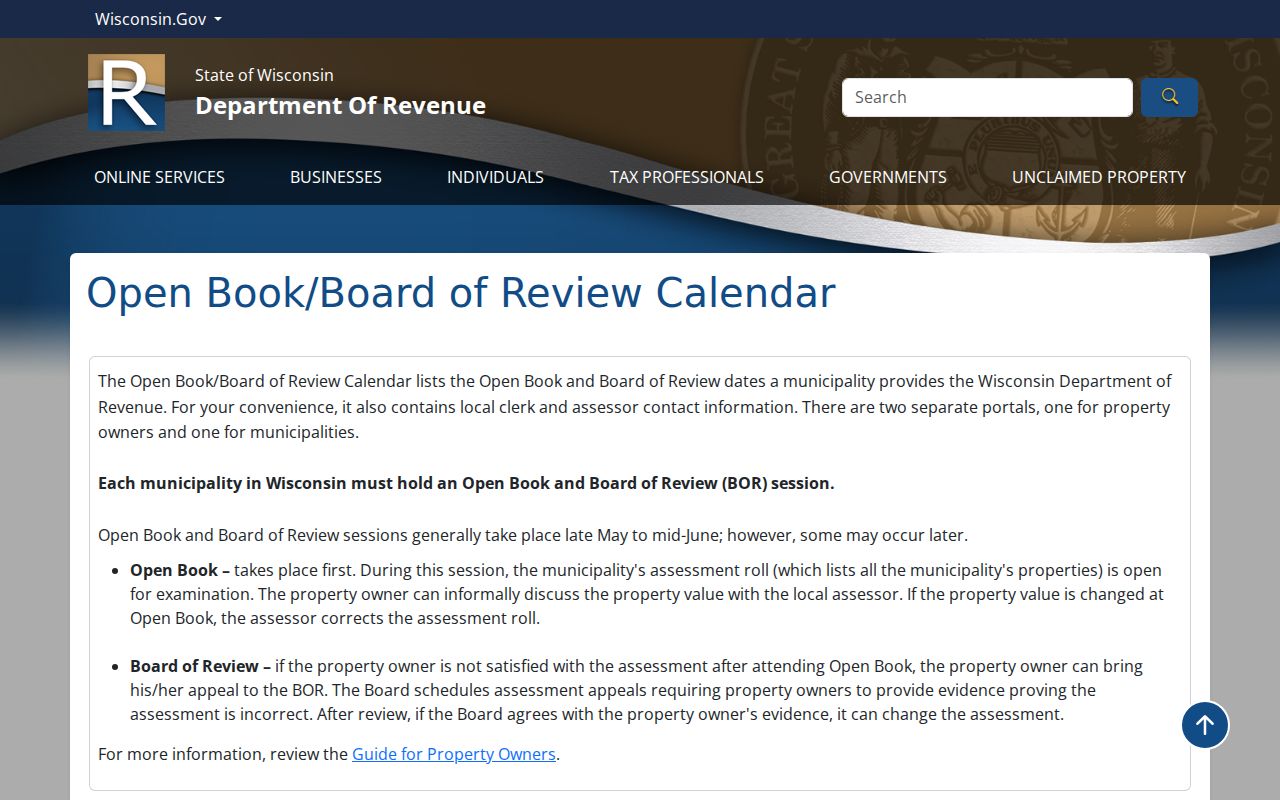
Check the municipality's notice and the DOR calendar before filing. Those two sources carry the real deadlines.
Find an Ozaukee County Tax Bill
A tax bill and an assessment roll answer different questions. The bill shows amounts due and the taxing structure. The assessment record identifies the value the municipality used. Port Washington's tax information page describes the county parcel system as a place to print tax bills and receipts, review real-estate and personal-property tax history, check survey and assessment dates, and open county-filed documents or plats. It is one system serving several jobs.
- Find the parcel with its ID or the street number and name.
- Open TAXES to review the displayed tax years and bill detail.
- Use the local assessor or municipality for questions about the assessment roll and local credits.
- If a balance appears, ask the Treasurer which office takes payment and whether a sale or tax deed record exists.
- Assessed value
- The value placed on the municipal assessment roll.
- Levy
- The amount a taxing body raises; the source set does not publish one countywide rate.
- Equalized value
- DOR's district-level estimate of market value, distinct from one parcel's assessment.
- Tax lien
- A recorded or statutory claim tied to unpaid tax; confirm the record rather than infer it from a balance.
Outstanding Tax Years Are Not a Sale
The TAXES detail can show years with outstanding balances. An unpaid bill is not proof of a tax sale or completed tax deed. Search the Register of Deeds for a recorded tax deed or related conveyance. Check the Treasurer or County Clerk for tax-sale material. The Treasurer handles tax-deed lands and collection. The county archive center lists a Sheriff Sales category that can help locate notices.
Foreclosure follows a separate case path. WCCA provides public case summaries, though filed court documents may require the courthouse self-help computers. Match every record to the parcel's legal description. An outstanding line is a prompt to ask the custodian, not proof of a transfer.
Local Assessors Keep the Ozaukee Roll
No single office values every parcel in Ozaukee County. Each city, village, and town relies on its own municipal assessor. The Real Property Lister and Treasurer tie those local assessments into the county tax roll and tax system. So an assessment dispute starts locally. Check which municipality the parcel record names, and direct questions there. When a postal address makes the boundary unclear, the county GeoHub can settle whether the property sits in a city, village, or town.
Requesting assessment records works best with specifics. Name the assessment year and the parcel ID. Then ask for the assessment record, the property class, and any land and improvement components. It also helps to request the Open Book or Board of Review date. Under Wisconsin Public Records Law, a request must reasonably describe an existing record. The custodian may charge permitted copying or locating costs. Compiling a brand-new database, though, is not something the custodian must do.
Appeal an Ozaukee County Assessment
An appeal starts with your municipal assessor at Open Book. Bring the assessment notice, your parcel number, and any evidence that speaks to value. That informal review settles many disagreements on the spot. If it does not, the Board of Review hears the formal objection.
Timing comes from the DOR calendar, not from one countywide schedule. Each Ozaukee County municipality sets its own dates and contacts.
Appeal window. Open Book usually comes before the Board of Review, with many Wisconsin sessions in late May through mid-June. Check the DOR calendar and local notice for the exact municipality date before filing.